Table of Contents
- 1. Introduction: Why World Cup Teams Matter
- 2. The Evolution of World Cup Teams
- 3. World Cup Groups: The Heartbeat of the Tournament
- 4. World Cup 2022 Qatar: Teams That Shone
- 5. World Cup Groups 2022 Tables & Brackets
- 6. Tactical Masterclass: How Teams Win
- 7. India’s Connection to World Cup Teams
- 8. Records & Statistics You Can’t Miss
- 9. 2026 World Cup: The Next Era
- 10. Fan Culture & World Cup Experience
- 11. Exclusive Insights for Players
- 12. World Cup Teams FAQ
1. Introduction: Why World Cup Teams Matter
The World Cup teams that grace the global stage every four years are far more than just 11 players on a pitch. They represent national identity, cultural pride and decades of footballing heritage. For fans in India 🇮🇳 and around the world, following world cup groups and the journey of each team is a rite of passage.
The FIFA World Cup has seen 80+ different nations compete since 1930. Some, like Brazil, have appeared in every single edition. Others, like Iceland or Panama, made history with truly memorable one-off appearances. The beauty of the World Cup lies in this diversity — a unique blend of the world's best teams, each with a unique story.
The world’s best teams train relentlessly to chase World Cup glory.
The significance of world cup groups cannot be overstated. The group stage draw determines the entire trajectory of the tournament. A "Group of Death" like Group E in 2022 (Spain, Germany, Japan, Costa Rica) can eliminate a favourite early. Meanwhile, a favorable group can carry a less-fancied team to the knockout rounds — just ask Morocco in 2022!
Why Follow World Cup Teams? 🌍
There is tremendous value in following international teams. Besides entertainment, it can teach you about:
- Time zones and global culture — matches are played at 3 AM IST sometimes, and the experience of watching with fellow fans across time zones is irreplaceable.
- Different playing philosophies — from Brazil's samba flair to Italy's defensive rock, each nation has its unique identity.
- Player development and emerging stars — scouting young breakout players before they take the world by storm.
- Leadership and teamwork — how captains rally squads under immense pressure.
2. The Evolution of World Cup Teams
The first World Cup in 1930 featured just 13 teams. Uruguay, the hosts and Olympic champions, claimed the inaugural title. Since then, the tournament has expanded dramatically.
A Brief Timeline of Expansion
- 1930 — 13 teams, Uruguay champions
- 1934 — 16 teams, Italy champions
- 1950 — 13 teams, Uruguay win again
- 1974 — 16 teams, West Germany champions
- 1982 — 24 teams, Italy's third crown
- 1998 — 32 teams, France's first title
- 2026 — 48 teams, the biggest yet
Dynasty Eras: The Greatest Teams Ever
Some World Cup teams transcend football: they become dynasties. The Brazilian team of 1970—with Pelé, Rivelino and Jairzinho—is celebrated as the greatest team ever. Their fluid attacking football and triangular passing patterns were decades ahead of their time.
The West Germany teams of 1972-1974, anchored by Franz Beckenbauer, introduced the sweeper role and set the standard for tactical discipline. Then there's Argentina's 1986, inspired by Diego Maradona's genius, where the Hand of God and Goal of the Century defined a World Cup.
In the modern era, Spain’s tiki-taka dynasty of 2008-2012 (peak 2010 World Cup) completely changed the game’s tactical vocabulary. Their possession-based approach — tiki-taka — was a masterclass in patience. Meanwhile, France in 2018 blended youthful speed with tactical pragmatism, beating Croatia 4-2 in the final.
3. World Cup Groups: The Heartbeat of the Tournament
The world cup groups stage is where the tournament truly comes to life. Teams are divided into pots based on FIFA rankings, then drawn into groups of four. Each team plays three matches, and the top two from each group advance, plus the best eight third-placed teams in newer formats.
The Group System Explained
Every World Cup group stage has brought its share of drama, upsets and unforgettable moments. Understanding how the pot system works makes watching matches much more exciting.
- Pot 1: Host nation(s) + the top 7 FIFA-ranked teams
- Pot 2: The next 8 best-ranked teams
- Pot 3: The following 8 teams
- Pot 4: The remaining 8 teams
The draw is designed to create competitive balance while offering the element of surprise. But the "Group of Death" phenomenon — where two evenly-matched favorites get drawn together — always spices things up.
The iconic trophy every team dream of holding during the World Cup group stage.
How Groups Influence Team Strategy
Teams carefully plan their group-stage approach. Should you win all three games and risk burnout, or manage your players' minutes and aim for steady progression? Coaches often tinker with lineups in the final group match, protecting stars while giving fringe players an opportunity.
4. World Cup 2022 Qatar: Teams That Shone
The 2022 Qatar World Cup was a landmark moment. It was the first time in the Middle East and the most expensive World Cup in history. For the players, playing in coastal, air-conditioned stadiums in November/December was truly unique.
Argentina lifting the trophy after a penalty shootout against France was a cinematic dream. However, it's crucial to discuss the Moroccan team — the first African team to reach a World Cup semi-final. They led the charge for emerging football nations.
Top 5 Standout Teams from 2022
- Argentina 🇦🇷 — Messi’s swan song ended in glory. They thrashed France on penalties (3-3 after extra time) with a stunning 3-3 scoreline.
- France 🇫🇷 — Mbappe’s hat-trick in the final was heroic. France came close to back-to-back titles, a feat last achieved by Brazil in 1962.
- Morocco 🇲🇦 — The surprise package who beat Spain and Portugal to reach the final four. They made the entire African continent proud.
- Croatia 🇭🇷 — Again, nearing the podium. Their midfield maestro Modrić continued to defy time.
- Japan 🇯🇵 — Beat Germany and Spain in the group stage — impossible dreams for many teams.
What Made Them Special?
Well, tactical discipline and team chemistry. Morocco's rigid defense, Croatia's midfield dominance, Japan's relentless pressing — every team had a clear identity. The common denominator between them was preparation and team spirit.
5. World Cup Groups 2022 Tables & Brackets
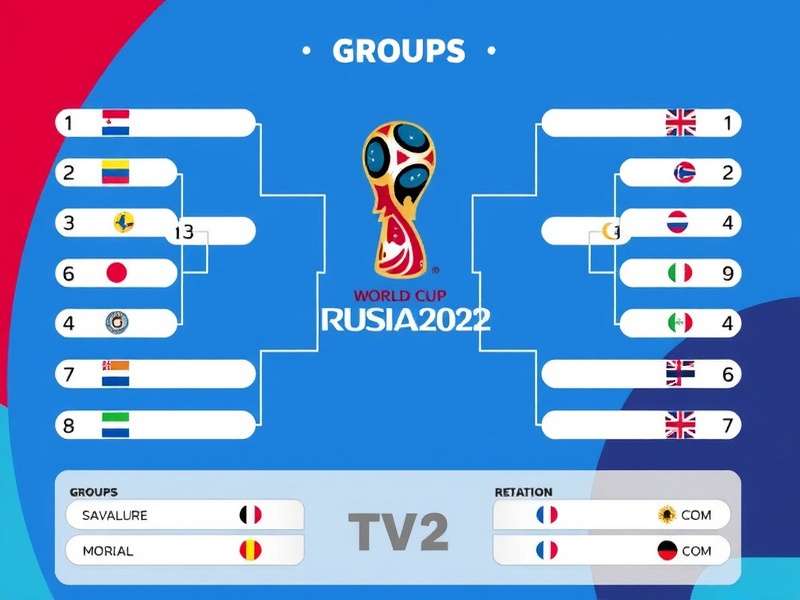
The final tables have been torn and tucked into history, but they still hold valuable lessons for data lovers. The 2022 World Cup groups 2022 tables show just how tight elite football has become.
Group A Table
Netherlands topped with 7 points. Senegal (6 pts) advanced as runners-up. Ecuador (4 pts) & Qatar (0) went home.
Group B: The Battle of Tactics
England (7 pts) dominated. USA (5 pts) joined them. Iran (3 pts) and Wales (1 pt) were eliminated.
Group C: Argentina’s Wake-Up Call
Арgentina lost to Saudi Arabia (2-1) in the opening — one of the greatest upsets. Argentina recovered and topped the table.
Group D: France’s Assertion
France & Australia progressed. Denmark & Tunisia were eliminated.
Group E: The Group of Death
Japan won the group, Spain came second, Germany and Costa Rica were eliminated.
6. Tactical Masterclass: How Teams Win
Winning the World Cup involves more than just having a generation of stars. It always comes down to the tactical setup, squad depth, and in-game adjustments.
The Four Most Effective Formations
- 4-3-3 — Used by Brazil in 1970 and Spain in 2010. Flexible, extensive wing-play, wingers as forwards.
- 3-5-2 — Used by Argentina in 1986 and many Italian sides. Requires tireless wing-backs.
- 4-2-3-1 — France 2018 used this double-pivot system to neutralize opponents while attacking quickly.
- 3-4-2-1 — England at the 2018 World Cup used this to dominate possession while remaining stable at the back.
The “Mental Game” Behind Elevation
Teams don't just win on talent. The mental strength to recover from a shocking loss (like Argentina's loss to Saudi Arabia in 2022) and still reach the final — that is a testament to elite sports psychology.
7. India’s Connection to World Cup Teams
Though India has never qualified for the World Cup, the tournament still unites the country. Every four years, millions of Indians crowd around screens — many before sunrise — just to watch Brazil, Argentina, Germany and France play. The Indian Super League (ISL) has elevated football's professional ecosystem, creating a generation of young players who dream of representing Indian in a World Cup.
Indian Players Who Went Abroad
- Sunil Chhetri — India's most capped player and goal-scorer, an icon in his own right.
- Gurpreet Singh Sandhu — has played for Stabæk in Norway.
- Anwar Ali — a young defender making waves in the ISL.
When India Almost Qualified?
India withdrew from the 1950 World Cup due to financial reasons and perhaps, lack of domestic scheduling. Some claim the team refused to play barefoot — though this myth has been disputed; the truth relates to funding and travel costs.
8. Records & Statistics You Can’t Miss
Numbers tell stories. Let’s explore the records held by World Cup teams and individual players, many of which stand to this day.
Team Records
- Most titles: Brazil (5)
- Most appearances: Brazil (22 editions)
- Most goals scored (forever, updated): Brazil has 236 goals across tournaments.
- Most consecutive World Cup qualifications: Germany (since 1954)
- Best ever overall win rate: Germany (66.6%)
Player Records
- Most goals: Miroslav Klose (16, Germany)
- Most assists: Pelé & Diego Maradona (multiple tied).
- Most appearances: Lionel Messi (26 matches, Argentina, 2022)
- Most trophies: Pelé (3 World Cup wins: 1958, 1962, 1970)
- Most goals in one tournament: Just Fontaine (13 in 1958, France)
9. 2026 World Cup: The Next Era 🚀
The 2026 FIFA World Cup will be hosted jointly by USA, Canada, and Mexico. It expands to 48 teams, promising more matches, more drama and more chances than ever before. Let’s break down the future:
New Format Explained
- 48 teams split into 12 groups of 4
- Top 2 per group (24) + 8 best third-placed teams (8) = 32 teams advance to Round of 32
- More matches: a total of 104 matches across 16 host cities
Qualified Teams So Far
Since it’s 2025, several teams have already secured their spot. The U.S., Canada, and Mexico automatically qualify as hosts. Japan, Australia, Iran, South Korea, and Saudi Arabia secured their tickets through AFC qualifying. Argentina and Brazil are well on their way too.
10. Fan Culture & World Cup Experience 🎉
No tournament experience matches the energy of watching World Cup fans from every nation come together. The vuvuzelas in South Africa became a global phenomenon in 2010. In Qatar 2022, Moroccan fans descended on Doha, setting off firecrackers and singing for hours.
The 2010 South Africa Vibe
South Africa's World Cup was full of wonderful joyful noise. The vuvuzela, a plastic horn, created a sound that TV broadcasters struggled with but which added to the unique flavour. Spain won that edition, with Iniesta scoring the extra-time winner against the Netherlands.
Indian Fan Communities
In India, bars and cafes fill with passionate fan screenings. The community aspect of World Cup viewing remains huge — playing fantasy leagues, making predictions about world cup groups and swapping jerseys of different World Cup teams.
11. Exclusive Insights for Players 💪
From training regimes to mental preparation, we’ve gathered insights that elite footballers who compete in World Cup teams take seriously.
The Role of Sports Science
Modern international teams employ sports scientists who track every physical metric. GPS vests monitor distance covered, sprint speed, and fatigue levels. After each group game, recovery may include:
- Cold water immersion (ice baths)
- Compression garments
- Personalized nutrition plans
- Sleep monitoring
Mental Preparation: A Look Behind the Scenes
Team psychologists work closely with players to handle the enormous pressure of representing your country. The spotlight is intense, and the expectations of a billion people can feel crushing. Techniques used include visualization, breathing exercises and mindfulness training.
12. World Cup Teams FAQ
What does “Group of Death” mean?
An unofficial term used to describe a group with several highly-ranked teams. It’s dangerous for all teams in it because even great teams may get eliminated early.
How many teams have won the World Cup?
Eight teams have won the World Cup: Brazil (5), Germany (4), Italy (4), Argentina (3), France (2), Uruguay (2), England (1), and Spain (1).
Which team has won the most World Cup matches?
Brazil holds that record with over 70 wins, and the greatest goal difference.
Who is the all-time top scorer in World Cup history?
Miroslav Klose of Germany, with 16 goals over four tournaments (2002, 2006, 2010 & 2014).
Has India ever qualified for the World Cup?
India has not qualified for the FIFA World Cup finals. The closest was the 1950 World Cup, where India received an invitation but withdrew.
When is the next World Cup?
The next men’s FIFA World Cup is in the summer of 2026, hosted by the United States, Canada and Mexico.
💬 Rate & Review World Cup Teams
Which team do you think is the greatest of all time? Share your thoughts! Your feedback helps other football enthusiasts.