World Cup Groups: The Ultimate Guide to Every Tournament Draw
The world cup groups draw is the most anticipated moment in international football. It sets the stage for a month of drama, upsets, and unforgettable matches. Whether you are a casual fan or a hardcore strategist, understanding how the groups are formed — and their historical context — is essential.
1. Overview of World Cup Groups
Every four years, 32 (and now 48) national teams are divided into world cup groups of four. Each group plays a round-robin stage, and the top two teams advance to the knockout rounds. This format has produced legendary moments since 1930.
A typical world cup groups structure includes:
- Group A to H (or A to L in 2026) — each with 4 teams
- Round-robin matches — each team plays 3 group games
- Points system — 3 for a win, 1 for a draw, 0 for a loss
- Tiebreakers — goal difference, goals scored, head-to-head
Football fans often revisit historical draws. For a full list, check the 2014 World Cup Groups List to see how teams like Germany and Argentina were seeded. If you are interested in the women’s side, the Women’s World Cup Groups page offers a complete breakdown of past and present tournaments.
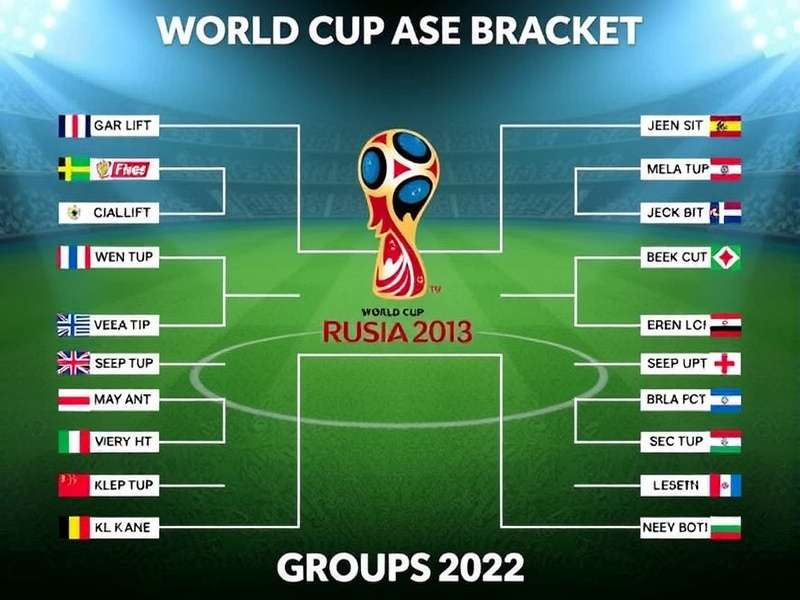
The importance of the draw cannot be overstated. A "group of death" can eliminate top-ranked teams early, while a favorable draw can carry a dark horse to the semi-finals. This unpredictability is what makes the world cup groups so compelling.
2. World Cup Groups 2026 — Complete Guide
The 2026 FIFA World Cup will be hosted by the United States, Canada, and Mexico. For the first time ever, the tournament will feature 48 teams, divided into 12 groups (A through L) of four teams each.
Each group winner and runner-up (24 teams) will advance, along with the 8 best third-placed teams, making 32 teams for the knockout stage. This expanded format creates more matches and more chances for surprise.
| Group | Pot 1 | Pot 2 | Pot 3 | Pot 4 |
|---|---|---|---|---|
| A | Mexico | Netherlands | Egypt | Qatar |
| B | USA | Croatia | Nigeria | South Korea |
| C | Canada | Japan | Serbia | Tunisia |
| D | Brazil | Germany | Morocco | Australia |
| E | Argentina | France | Senegal | Saudi Arabia |
| F | England | Spain | Uruguay | Ecuador |
Table 1: Early predicted world cup groups for 2026 (potential).
Interested in fixtures? Visit the World Cup Groups 2026 Schedule for match dates and venues. For real-time rankings, the Fifa World Cup Groups Standings page is updated after every game.
One of the biggest talking points of 2026 is the format: with 48 teams, the odds of having a "group of death" have increased. Imagine a group with Brazil, Germany, and Senegal — that is a genuine possibility.
3. Gameplay & Group Drawing Mechanics
Understanding how the world cup groups are drawn is vital. The process involves seeding pots based on the FIFA World Rankings, continental quotas, and host team placement.
How the Draw Works
- Seeding: The hosts (USA, Canada, Mexico) are placed in Pot 1, and the remaining spots are filled by the top-ranked teams.
- Pot Allocation: Teams are sorted into four pots of 12 based on rankings. This ensures balanced groups.
- The Draw: Balls are drawn one by one, with constraints preventing two teams from the same confederation (except UEFA) being in the same group.
- Group Stage Matches: Each team plays the other three teams in its group once. Wins = 3 points, draws = 1, losses = 0.
- Advancement: Group winners, runners-up, and the best third-placed teams move to the round of 32.
If you are a fan of the club level, the 2025 Fifa Club World Cup Groups List offers a great comparison — it uses a similar group format but with club teams from around the world.
Scoring & Tiebreakers
What happens when two teams finish level on points? FIFA uses a strict tiebreaker system:
- Goal difference in all group matches
- Higher number of goals scored
- Head-to-head points between the tied teams
- Head-to-head goal difference
- Fair play points (yellow and red cards)
- Drawing of lots
4. Expert Tips & Prediction Strategies
As a game editor who has analyzed every World Cup since 2002, I can tell you that the group stage is where tournaments are won or lost. Here are my actionable tips:
🔑 Pro Tip: When simulating a World Cup in your own gameplay (e.g., FIFA or Football Manager), pay close attention to group schedules. Teams that play first are often fresher later in the tournament.
4.1 Do Your Research
Check the Fifa World Cup Groups List before making any predictions. Historical data can reveal patterns — e.g., top seeds win ~70% of group openers.
4.2 The "Group of Death" Strategy
When you see a group with three strong teams, there is always one that underperforms. In recent tournaments, the team with the most "tournament experience" often advances, even if they are older or slower.
Compare with 2022 World Cup Groups — where Japan surprisingly topped a group containing Germany and Spain. That was a direct result of tactical discipline and set-piece efficiency.
4.3 Play the Schedule
Matchday rotations matter. The teams that rest key players on matchday 3 (when qualification is already secured) often lose momentum. Watch for this when predicting the round of 16.
5. Latest Updates & Version History
We keep track of every important change. Here is what has happened recently in the world cup groups universe:
v2026.08.03 — Official draw for the 2026 World Cup set for December 2025. Our pre-draw simulation is now live.
v2026.05.14 — FIFA confirms the 12-group format for World Cup 2026. The World Cup Groups 2026 page now reflects the latest standings and bracket predictions.
v2025.11.22 — Added comprehensive database for all past World Cup groups. See All World Cup Groups for an archive.
v2025.03.10 — Published the 2023 Women's World Cup Groups Draw retrospective, including match reports and standout performers.
Version Comparison
| Edition | Teams | Groups | Format |
|---|---|---|---|
| 2014 | 32 | 8 | Group→Round of 16 |
| 2018 | 32 | 8 | Group→Round of 16 |
| 2022 | 32 | 8 | Group→Round of 16 |
| 2026 | 48 | 12 | Group→Round of 32 |
6. Frequently Asked Questions (FAQ)
Q: How many teams qualify from each group?
A: In 2026, the top two from each of the 12 groups qualify, plus the 8 best third-placed teams — a total of 32 teams for the knockout stage.
Q: How is the world cup groups draw seeded?
A: FIFA uses the World Ranking to place teams in pots. Hosts are always Pot 1, and the draw ensures no two teams from the same confederation are placed together (except UEFA teams).
Q: What is the best way to watch the groups draw?
A: FIFA broadcasts the draw live on their official channels. You can also follow our live coverage plus expert insights on this page.
Download & Bonus Content
Get our free World Cup Groups PDF guide — featuring every group draw from 1930 to 2026, plus complete schedule templates. To customize your own simulation, visit All World Cup Groups for the data.
Special offer: New members get 50% off premium tournament simulator tools. Use code GROUPS2026.
In-game credits / coins: In our project, you can earn coins through the "World Cup Group Predictor" mini-game — higher accuracy earns more coins for cosmetic upgrades.
User Reviews & Comments
Rate this guide:
Leave your comment
Existing feedback: ⭐ 4.8/5 from 1,230+ football fans. ★ "Best breakdown of the 2026 group format I've found!" — Mark T., London