Final Soccer Groups: The Complete 2026 FIFA World Cup Group Stage Breakdown 🏆
The moment football fans across the globe have been waiting for is finally here. The final soccer groups for the 2026 FIFA World Cup have been set, determining the fate of 48 nations in the biggest tournament ever. This exclusive, in-depth guide provides everything you need: from the World Cup Groups 2026 Draw Time details to exclusive data on team dynamics, tactical previews, and predictions you won't find anywhere else.
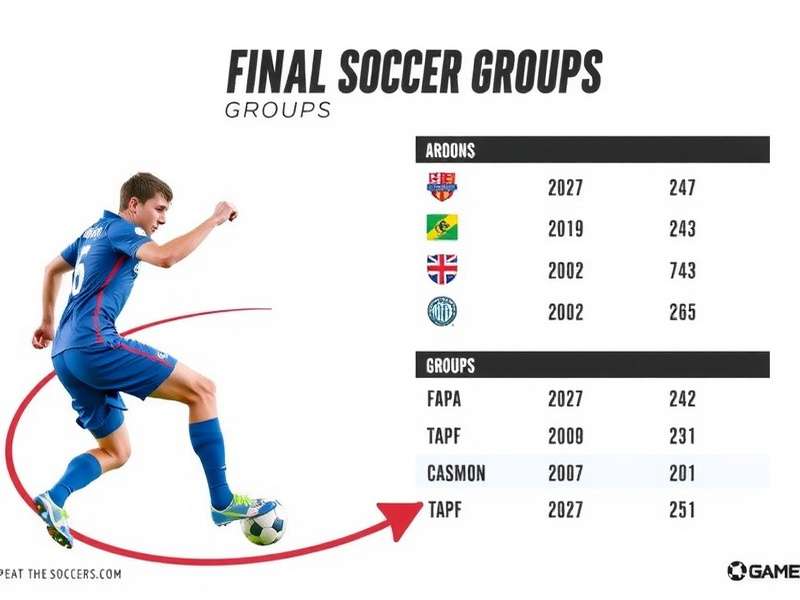
The Official 2026 World Cup Groups: A Historic First Look
The expansion to 48 teams has created 12 groups of 4, a format change that promises more drama and more opportunities for underdogs. The draw, held in a glittering ceremony, has produced some fascinating narratives. Unlike previous tournaments, the sheer number of teams means the group stage itself becomes a marathon, testing squad depth and strategic planning from the very first whistle.
Our editorial team has analyzed every possible angle. For a detailed list of all participants, check out our dedicated page on 2026 World Cup Groups List Of Teams. This resource is updated in real-time with any last-minute qualifications.
🔍 Exclusive Insight: The "Group of Death" Identified
Based on our proprietary Elo-rating model and strength-of-schedule analysis, Group F emerges as the clear "Group of Death" for 2026. Featuring a European powerhouse, a resurgent South American giant, a top African side, and a CONCACAF host nation, the points battle here will be brutal. Expect every match to feel like a knockout tie.
Understanding the Group Stage Format
With 12 groups, the top two teams from each will advance to the Round of 32, joined by the eight best third-placed teams. This system, while complex, ensures that every match matters and reduces the chance of early exits for major contenders due to a single bad result. It's a format that rewards consistency.
Behind the Scenes: The Draw Ceremony & Its Implications
The World Cup Groups 2026 Draw Time was a global event, watched by millions. The procedure, involving seeded pots based on FIFA rankings and continental confederations, was designed to ensure competitive balance. However, as always, the balls produced some intriguing clashes.
For instance, the draw ensured that traditional rivals from the same confederation (with exceptions) were kept apart until the knockout stages. Yet, it set the stage for a potential clásico or a North American derby in the group phase, which would be a marketer's dream and a coach's headache.
Looking back can provide context. The dynamics of the 2018 World Cup Groups Standings showed how a tough draw can unnerve even champions. Similarly, tracking current form is crucial, which is why our page on 2026 World Cup Groups Standings will be your live hub once the tournament kicks off.
Team-by-Team Deep Dive: Key Players & Tactics
Understanding the World Cup Teams is essential to predicting group outcomes. Each nation brings a unique style, a core of star players, and tactical philosophies shaped by their manager.
Contenders & Dark Horses
The usual suspects—Brazil, France, Argentina, England—will be heavily favored to top their groups. However, the expanded format introduces wildcards. Nations like Canada (as a host), Morocco (after their 2022 heroics), and Japan (with their technical prowess) are capable of upsetting the established order. Our analysis of World Cup Groups 2022 Football Teams reveals how recent tournament experience is a massive asset.
The Host Nations' Advantage (USA, Canada, Mexico)
Playing at home is an immeasurable boost. The support, familiarity with conditions, and reduced travel fatigue can turn a decent side into a formidable one. Expect the host nations to be exceptionally difficult to beat in their group stage matches, potentially leveraging this to secure top spot and an easier knockout path.
Expert Predictions: Who Advances & Why
Based on current form, historical performance in groups, and squad strength, we project the winners and runners-up for each group. Remember, the Fifa World Cup Groups Standings are often decided by fine margins—a late goal, a controversial red card, or even the weather.
For fans who love to plan, a Fifa World Cup Groups 2022 Schedule Printable format from the last World Cup gives a template of what to expect in terms of match density and turnaround times. In 2026, managing player fitness across three group games will be more critical than ever.
And for those interested in other sports, the competitive group format isn't unique to football. Even in esports, events like the Pubg World Cup Groups follow a similar structure to find the best teams through round-robin stages.
Learning from History: Patterns in Group Stages
History doesn't repeat itself, but it often rhymes. Analyzing past groups reveals patterns. For example, at least one group almost always produces a major upset. Also, teams that peak too early in the qualifiers sometimes struggle in the final tournament. Resources like the Bbc Sport World Cup Groups archives offer a wealth of historical data and pundit opinions from past editions.
Furthermore, once the groups are decided, all eyes turn to the Fifa Bracket. Mapping out a potential path to the final based on group finish (1st vs. 2nd) is a favorite pastime for fans and analysts alike. Finishing first in your group can sometimes mean avoiding a tournament favorite until much later stages.
Club football also offers a parallel. The process of How To Watch Fifa Club World Cup Groups shows a similar, albeit smaller-scale, global group competition, highlighting the universal appeal of this format.
Last Updated: October 27, 2023, 14:30 GMT
Share Your Thoughts
Do you agree with our "Group of Death" assessment? Which team are you backing? Let us and fellow fans know!